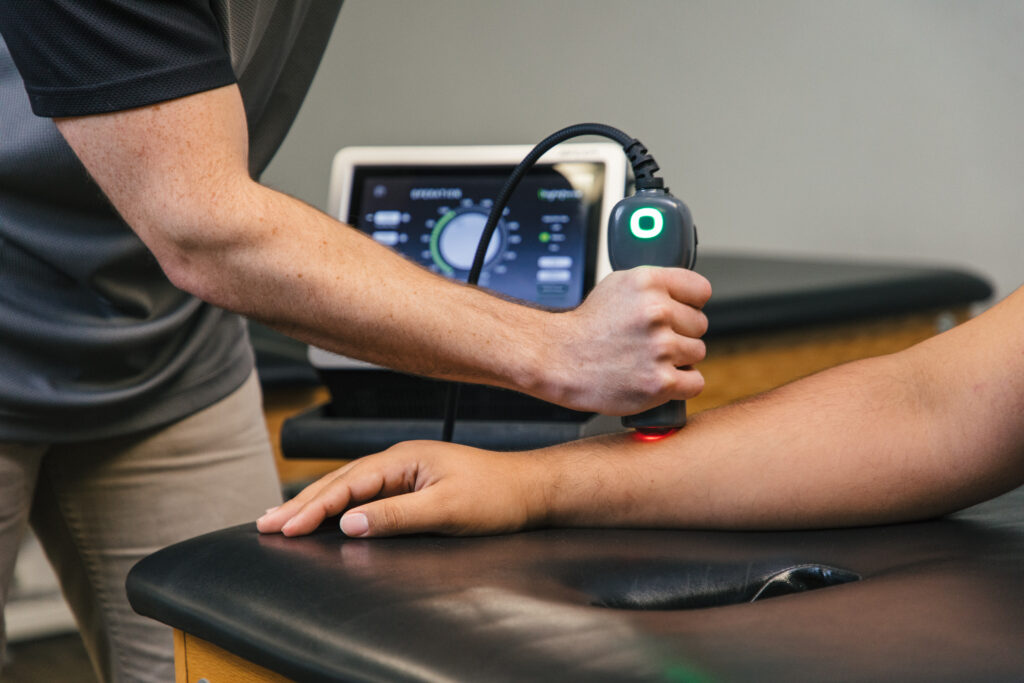
Are neck pain, low back pain, disc injuries or radiating symptoms interfering with your daily life? At Lindley Chiropractic Health in Gig Harbor, Washington, we offer individualized spinal traction therapy using the Chattanooga Triton 6M system as part of a personalized approach to chiropractic care.
Spinal decompression therapy is a term commonly used to describe controlled spinal traction. This treatment applies a carefully selected pulling force to the cervical or lumbar spine with the goal of reducing mechanical stress and helping manage certain types of spinal pain.
Whether you are experiencing persistent low back discomfort, neck stiffness, or pain that travels into an arm or leg, Dr. Jack Lindley will evaluate your condition to determine whether spinal traction may be an appropriate addition to your care plan.
Looking for spinal decompression in Gig Harbor? Schedule an evaluation at Lindley Chiropractic Health to discuss your symptoms and treatment options.
Spinal decompression therapy uses controlled mechanical traction to apply a gradual pulling force to the spine. Depending on the treatment setup, traction may be applied to the neck (cervical spine) or lower back (lumbar spine).
At Lindley Chiropractic Health, we use the Chattanooga Triton traction system to deliver mechanical traction with adjustable treatment parameters. Chattanooga’s Triton traction technology offers programmable treatment options, including static, intermittent, and cycling traction patterns, allowing the clinician to tailor the application to the patient’s needs and tolerance.
During treatment, you will be positioned comfortably on the appropriate traction setup. A clinician applies the prescribed force and monitors your response throughout the session.
The purpose is to help manage symptoms associated with selected spinal conditions. Traction may temporarily alter loading on spinal joints and surrounding tissues, but results vary from person to person.
Spinal traction is non-surgical and does not involve injections. It is not a guaranteed way to reposition a disc, reverse degeneration, or permanently relieve nerve compression.
Spinal traction may be considered for certain patients with neck or back conditions after a clinical evaluation. Its usefulness depends on the diagnosis, symptom pattern, examination findings, and response to treatment.
A spinal disc sits between neighboring vertebrae and helps distribute forces through the spine. When a disc bulges or herniates, it may contribute to local pain or irritation of a nearby nerve.
Depending on the presentation, spinal traction may be considered as one component of a treatment plan for:
Sciatica commonly describes pain that travels from the low back or buttock into the leg. In some cases, symptoms are associated with irritation or compression of a lumbar nerve root.
Patients may experience shooting pain, tingling, numbness, or changes in sensation. In selected cases, lumbar traction may be considered as part of a broader care plan, although research does not support routine traction for every patient with low back pain or sciatica.
Cervical radiculopathy occurs when a nerve root in the neck becomes irritated or compressed. Symptoms may travel from the neck into the shoulder, arm, or hand.
Depending on the cause and clinical findings, cervical traction may be considered for patients experiencing:
Clinical research provides some support for cervical traction when combined with other conservative treatments for cervical radiculopathy. However, results are mixed, and traction is not appropriate for every patient.
Age-related changes in the discs and joints of the spine are common. Some people experience pain or stiffness associated with these changes, while others have no symptoms.
Spinal traction may be considered in selected cases to help manage symptoms related to mechanical spinal conditions. It does not reverse arthritis, regenerate discs, or restore lost disc height.
Not all nerve symptoms originate in the spine. Tingling, numbness, burning, and weakness may result from peripheral neuropathy, nerve entrapment, systemic conditions, or other causes.
Spinal traction is most relevant when symptoms are thought to be associated with spinal nerve-root irritation. It is not an established treatment for peripheral neuropathy caused by diabetes, vitamin deficiencies, chemotherapy, or other systemic conditions.
An appropriate evaluation helps determine whether spinal traction is worth considering or whether another type of assessment or treatment is needed.
Your experience begins with an evaluation of your symptoms, health history, movement, and relevant examination findings.
If spinal traction is appropriate, your treatment may include the following:
You will be positioned for cervical or lumbar traction based on the area being treated and the equipment setup.
The clinician selects the treatment parameters, including force, duration, and traction pattern, based on your condition, tolerance, and response.
Your symptoms and comfort are monitored. Treatment should be adjusted or stopped if symptoms worsen or concerning signs develop.
Your response is evaluated over time. When appropriate, traction may be combined with exercise, movement guidance, and other chiropractic or rehabilitation approaches.
Our goal is to provide individualized care rather than use the same treatment settings for every patient.
The duration of a spinal traction session depends on the area being treated, the clinical protocol, and your response.
As a general planning estimate, a traction application may take approximately 10–20 minutes, although some published cervical traction studies have used sessions lasting 15–20 minutes or longer. This is not a universal prescription, and your actual treatment duration may differ.
Your appointment may also include an examination, reassessment, or other components of your care plan.
There is no single frequency or number of sessions that is appropriate for everyone.
Published studies of cervical radiculopathy have used different schedules, including approximately 7–15 treatment sessions over three to four weeks. These research schedules describe how particular studies were conducted; they do not establish a universal treatment plan for every patient or every traction device.
At Lindley Chiropractic Health, the recommended frequency depends on your examination findings, symptom severity, goals, and response to treatment.
We may reassess your symptoms and function during an initial trial to determine whether continuing traction appears worthwhile. If treatment is not helping or symptoms worsen, the plan should be reconsidered.
Spinal traction is not appropriate for every spinal condition. Before treatment, your clinician should screen for factors such as suspected fracture or instability, significant bone fragility, possible spinal cord involvement, or other conditions that may make traction unsafe.
New or progressive weakness, difficulty walking, or loss of bowel or bladder control requires prompt medical evaluation rather than routine traction treatment.
If you have been diagnosed with a herniated disc, degenerative disc disease, sciatica, or cervical radiculopathy, an evaluation can help determine whether traction may be a reasonable option for your specific presentation.
At Lindley Chiropractic Health, we believe effective care starts with understanding the individual, not simply treating an imaging finding or symptom.
Dr. Jack Lindley takes an individualized approach to chiropractic care, evaluating your concerns and discussing appropriate treatment options based on your needs and goals.
Our approach emphasizes:
If you are searching for spinal decompression or spinal traction in Gig Harbor, WA, we welcome the opportunity to discuss your concerns and determine whether this service may fit into your care plan.
Does spinal decompression fix a herniated disc?
Spinal traction may help manage symptoms in some patients, but evidence does not establish that it reliably pulls a herniated disc back into place or repairs the disc. Treatment decisions should be based on symptoms and clinical findings, not imaging alone.
Can spinal decompression help sciatica?
It may be considered in selected cases when symptoms are associated with lumbar nerve-root irritation. However, evidence for lumbar traction is limited and conflicting, and major guidelines do not recommend it routinely for low back pain or sciatica.
Can spinal decompression treat neuropathy?
Spinal traction is not an established treatment for peripheral neuropathy. It may be relevant when symptoms arise from a spinal nerve root, but other causes of numbness, tingling, or burning require appropriate evaluation.
Is spinal decompression painful?
Traction should be delivered within a tolerable range and monitored by a trained clinician. Let your clinician know immediately if you experience increased pain, worsening radiating symptoms, dizziness, or other concerning changes.
How many sessions will I need?
There is no guaranteed number. Your recommended schedule depends on your condition, response, and treatment goals. Your progress should be reassessed rather than continuing a predetermined course regardless of results.
Is spinal decompression the same as surgery?
No. This service refers to non-surgical mechanical traction. Surgical spinal decompression is a different procedure performed by a surgeon to relieve pressure on neural structures.
If neck pain, low back pain, or radiating symptoms are affecting your quality of life, Lindley Chiropractic Health can help you explore appropriate care options.
Contact our Gig Harbor chiropractic office to schedule an evaluation with Dr. Jack Lindley and discuss whether spinal traction may be appropriate for your condition.
How soon should I see a chiropractor after a car accident?
If you are experiencing pain, stiffness, headaches, or other symptoms following an accident, an appropriate medical evaluation is important. The timing of chiropractic care depends on your individual circumstances and any recommendations from your medical providers.
Dr. Jack Lindley takes an individualized approach to auto accident care, with thorough evaluations and treatment plans that are reassessed as you progress.
Contact Lindley Chiropractic Health today to schedule an evaluation and take the next step toward getting back to the activities you enjoy.